Southington Chimney Services
A clean chimney is a safer chimney. In Southington, CT, homeowners rely on wood-burning fireplaces, inserts, and stoves for warmth and comfort—especially when New England weather settles in. Over the course of a heating season, these systems naturally accumulate soot and creosote. Creosote is a highly combustible byproduct of incomplete combustion; if it accumulates unchecked, it can ignite and accelerate a flue fire. Our professional chimney sweeping service is designed to remove these deposits, restore proper draft, and give you the confidence to light your next fire without worry.
At Southington Chimney Services, sweeping is more than running a brush up a flue. We approach each home with a clear process, careful containment, and attention to detail that protects your living space and your system. We use HEPA-filtered vacuums, stiff- and soft-bristle rods sized for your liner, and mechanical or chemical assistance for glazed creosote when appropriate. Our technicians document findings as they sweep, from minor obstructions to early signs of moisture intrusion or liner damage, so you leave each appointment with a clear understanding of your chimney’s condition.
Every Southington chimney is a little different—some are straight runs of clay tile, others are stainless steel liners in older masonry chimneys, and many include offsets. Regardless of configuration, we prepare your space with drop cloths and protective coverings, set up containment, and stage equipment to minimize movement through your home. We sweep top-down, bottom-up, or a hybrid method depending on your cap access and roof pitch, communicating our plan before we begin. When deposits are loosened, our HEPA vacuum captures debris at the firebox or appliance connection so dust does not migrate into the room. We finish by tidying the firebox, brushing the smoke shelf, and inspecting visible components to confirm clear passage.
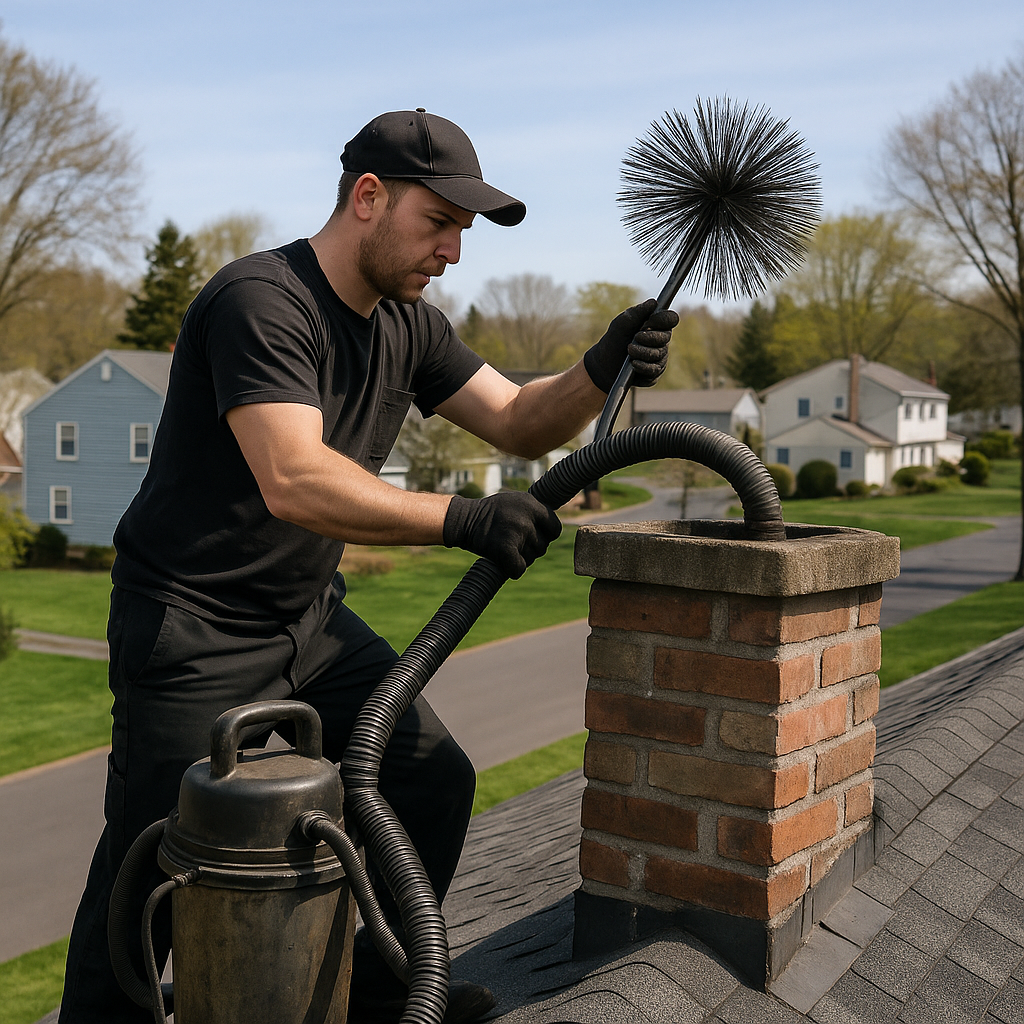
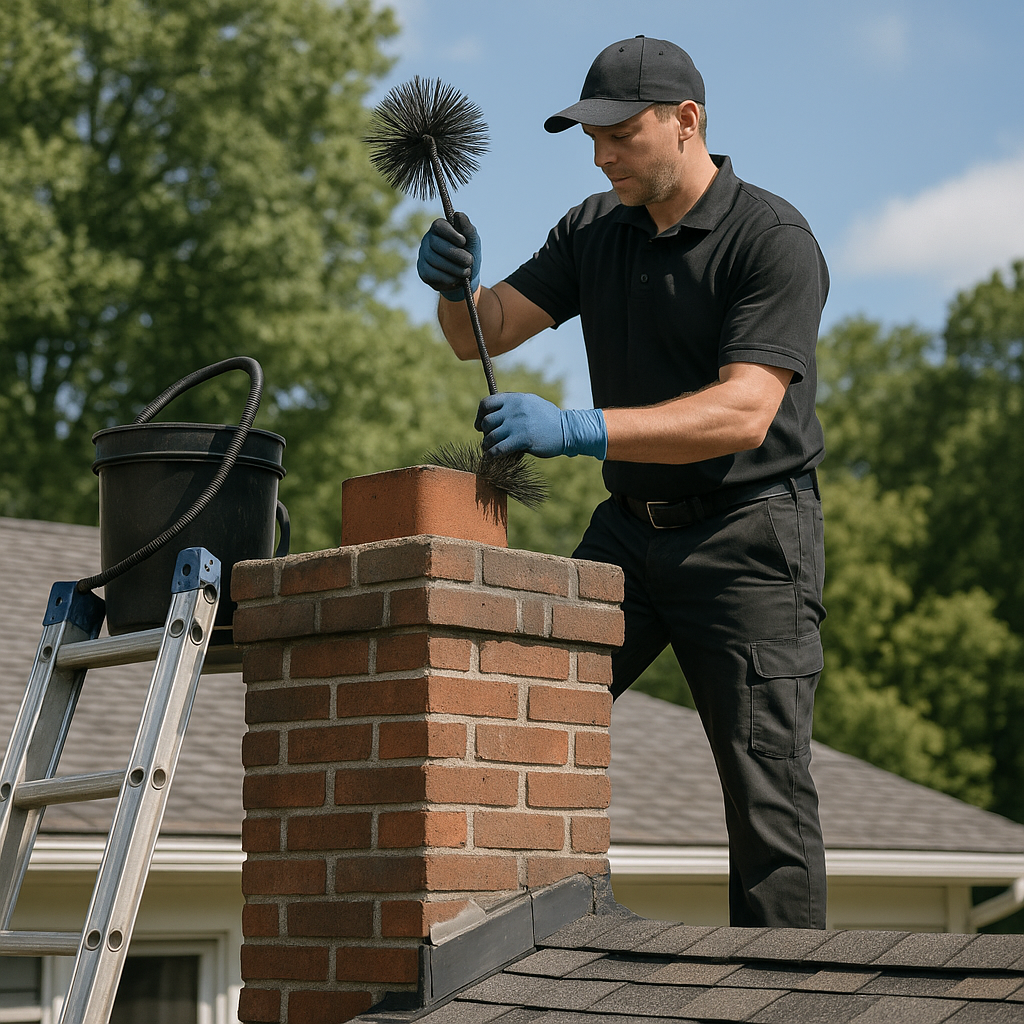
We treat your home like our own. That means careful preparation before any brush touches the flue: furniture protection when necessary, sealed containment at the firebox, shoe covers upon entry, and a meticulous cleanup when the job is done. Homeowners often tell us they were worried about soot spreading throughout the room; after we sweep, many are surprised to find the living area cleaner than when we arrived. It’s a small detail that reflects how we operate—precision, respect, and pride in our work.
Frequency depends on your fuel, appliance type, and burn habits. As a general guideline, many homeowners schedule a sweep annually prior to heating season. If you burn daily or use softer, unseasoned wood, you may need a mid-season check. Pellet appliances tend to produce finer ash and can clog venting if neglected; oil and gas flues can accumulate corrosive byproducts and require periodic service too. If you notice smoke backing into the room, persistent odors, a tar-like glaze on the liner, or a visible coating thicker than 1/8 inch, it’s time to schedule a cleaning. During real estate transactions, a cleaning paired with an inspection helps both buyer and seller understand the system’s condition.
One of the most appreciated benefits of sweeping is a measurable improvement in draft. Deposits roughen the interior of a flue, interrupting smooth airflow and encouraging smoke spillage. By removing soot and creosote, we restore a cleaner pathway, which helps exhaust flow and reduces odors. During the visit, we also look for the upstream causes of poor draft—oversized firebox openings, missing or damaged throat dampers, chimney height relative to the roofline, or competing exhaust fans in the home. When appropriate, we recommend cost-effective upgrades such as a top-sealing damper, a properly sized stainless cap, or minor smoke-chamber parging to smooth transitions and encourage stable draft.
In some systems, especially those burned low and slow with damp fuel, creosote can condense into a hard, shiny glaze that is notoriously difficult to remove. Traditional brushing may not be enough. Our team evaluates the severity and selects an approach that may include rotary chains, mechanical scrubbing, or the use of specialized catalysts that safely break down the glaze over time. Not every flue is a candidate for aggressive tools; if we discover cracked tiles or gaps, or if the liner is undersized for the appliance, we’ll discuss options including relining to simultaneously address safety and performance.
A chimney cap is the first line of defense against leaves, rain, and wildlife. When caps are missing or damaged, the flue can quickly collect debris or become the preferred address for birds and small animals. We remove accessible obstructions during the sweep and inspect the crown and cap to prevent a repeat. If you’ve been hearing scratching sounds, smelling unusual odors, or experiencing sudden draft problems after a storm, an obstruction is a prime suspect. Once cleared, we’ll recommend a stainless, mesh-screened cap sized for your flue and local conditions in Southington, CT.
While sweeping focuses on deposit removal, it also provides a valuable opportunity to spot early hazards. We pay close attention to the firebox mortar joints, damper condition, smoke shelf debris, smoke-chamber transitions, and any signs of moisture at the crown or flashing. If we observe a concern that extends beyond cleaning—like deteriorated mortar, crown cracking, or a missing liner—we’ll explain the finding and outline repair options. When appropriate, we may recommend a camera-assisted inspection to provide photographic evidence so you can make an informed decision about next steps.
The best way to reduce creosote is to burn seasoned hardwood—wood that’s been split and dried for at least 6–12 months, stored off the ground, and protected from rain. Wet wood smolders, produces cooler smoke, and dramatically increases creosote formation. Build smaller, hotter fires that allow for complete combustion; open the damper fully on startup to establish draft; and avoid restricting airflow too much in the name of “efficiency.” We’re happy to review your setup and provide personalized recommendations so you can enjoy longer burn times with cleaner glass, less odor, and less frequent sweeping.
Many Southington homes rely on appliances other than wood. Oil and gas furnaces or water heaters often vent into masonry chimneys that were not originally designed for modern efficiency levels. Condensation, acidic byproducts, and lower flue temperatures can damage clay liners over time. Our sweeping service for these systems focuses on flue cleanliness and clear venting, and we’ll advise if a stainless steel liner or direct-vent conversion would better suit the appliance. Pellet stoves and inserts require regular cleaning of both the unit and venting to maintain performance and avoid nuisance shutdowns; we provide that service on a schedule that matches your usage.
We believe you should know what to expect before we arrive. When you call, we’ll ask a few questions—appliance type, fuel, approximate chimney height, last service date—to estimate the scope. On site, if we discover complexity that changes cost (for example, heavy glazed creosote or an inaccessible cap), we’ll pause, explain why, and seek your approval before proceeding. No surprises, no pressure—just the information you need to make the right call for your home.
Our team blends careful workmanship with local knowledge. We understand central Connecticut’s freeze-thaw cycles, the common masonry details in Southington neighborhoods, and the code expectations that keep homes safe. We arrive when we say we will, protect your floors and furnishings, and leave your home as tidy as we found it. Much of our work comes from referrals—neighbors telling neighbors that there’s finally a chimney company that communicates clearly, respects their time, and stands behind its service.
If you’re in Southington, CT and want a chimney sweeping team that respects your home, communicates clearly, and focuses on safety, we’d love to help. Call us at (860) 362-4594 or request a service slot online. We’ll confirm the best time, outline preparation tips, and make sure you’re set for a cleaner, safer burn season.
Book Your SweepHelpful answers
We use sealed containment and HEPA-filtered vacuums to capture soot at the source. Floors and furnishings near the hearth are covered, and we tidy the firebox before we leave. Our no-mess approach is one reason Southington homeowners recommend us.
Most standard sweeps are completed in about an hour, though complex systems or heavy creosote may take longer. We’ll give you an arrival window and keep you updated if anything changes once we evaluate the system.
We always keep an eye on safety while sweeping—if we notice issues like cracked tiles, missing mortar, or moisture entry, we’ll document and discuss them. For property transfers or suspected damage, we may recommend a camera-assisted inspection for detailed reporting.
Please stop using the fireplace or appliance for at least 24 hours so the system is cool, move fragile items a few feet from the hearth, and make sure a nearby outlet is available for our HEPA vacuum. If roof access is required, we’ll review safety and setup on site.
Clear pricing • No-mess guarantee • Local technicians



 Nora S., Southington
 Last month